A sports injury rehabilitation visit can be scary. You’re not sure what to pack, what they’ll do, or how long recovery will take. But arriving prepared makes a big difference. Whether you rolled your ankle, tore your ACL, or strained a muscle, sports injury rehab will help you get back up and running safely and effectively. Here’s a straightforward introduction to what happens from the moment you step in.
Table of Contents
What Is Sports Injury Rehab?

Sports injury rehab is a structured recovery program. It targets muscles, joints, and bones. Licensed physical therapists lead every session. They use evidence-based methods to reduce pain, restore movement, and prevent re-injury.
It’s a form of orthopedic physical therapy built around how athletes and active people move. According to the American Physical Therapy Association, orthopedic physical therapy treats conditions of the musculoskeletal system, the bones, muscles, and joints that sports put under stress.
Who needs sports injury rehab?
- Weekend runners and recreational athletes
- Competitive athletes returning from injury
- Anyone with a sprain, strain, fracture, or ligament tear
- Post-surgical patients (e.g., ACL reconstruction)
What Happens at Your First Visit
Your first session at a sports injury clinic lasts about 60 minutes. It’s packed with useful information. Here’s what the visit looks like, step by step:
1. Injury History and Goals
Your therapist starts by listening. They’ll ask how the injury happened, what makes it worse, and what you want to return to. Be specific — “I want to run a 10K in 8 weeks” helps set the right plan.
2. Physical Exam
They’ll test your range of motion, strength, flexibility, and joint stability. For a knee injury, this may include measuring the bend angle and testing ligament integrity. It’s gentle and informative, not a pain test.
3. Diagnosis and Goal Setting
Your therapist describes what was hurt and how serious it is. You will establish both short-term (lower swelling, recover motion) and long-term goals (return to sport). This offers your rehabilitation a specific direction.
4. First Treatment Session
Treatment often begins the same day. Expect a mix of:
- Manual therapy, which involves hands-on joint and soft tissue work to improve movement and reduce discomfort.
- Therapeutic exercises, which are targeted to your stage of injury to restore strength, mobility, and function.
- Pain management tools, which may include ice, heat, or electrical stimulation to help reduce pain.
- A home exercise program, which gives you exercises to do between visits so you can keep making progress.
Tip: Wear athletic clothing. Shorts for knee injuries, a tank top for shoulder issues.
Sports Rehab Physical Therapy Techniques
Modern sports rehab physical therapy involves more than just stretching. Your program may include the following:
- Therapeutic exercise: strengthening, balance, and sport-specific drills
- Blood Flow Restriction Training (BFRT): builds muscle strength with low-load exercise
- Ultrasound therapy: promotes tissue healing and blood flow
- Aquatic or anti-gravity treadmill therapy: allows early movement without stressing healing tissue
- Sport-specific training: agility drills, cutting patterns, and return-to-sport testing
Research shows that early, active rehab shortens overall recovery time. The goal is always to get you moving and not just resting.
Common Sports Injuries We Treat
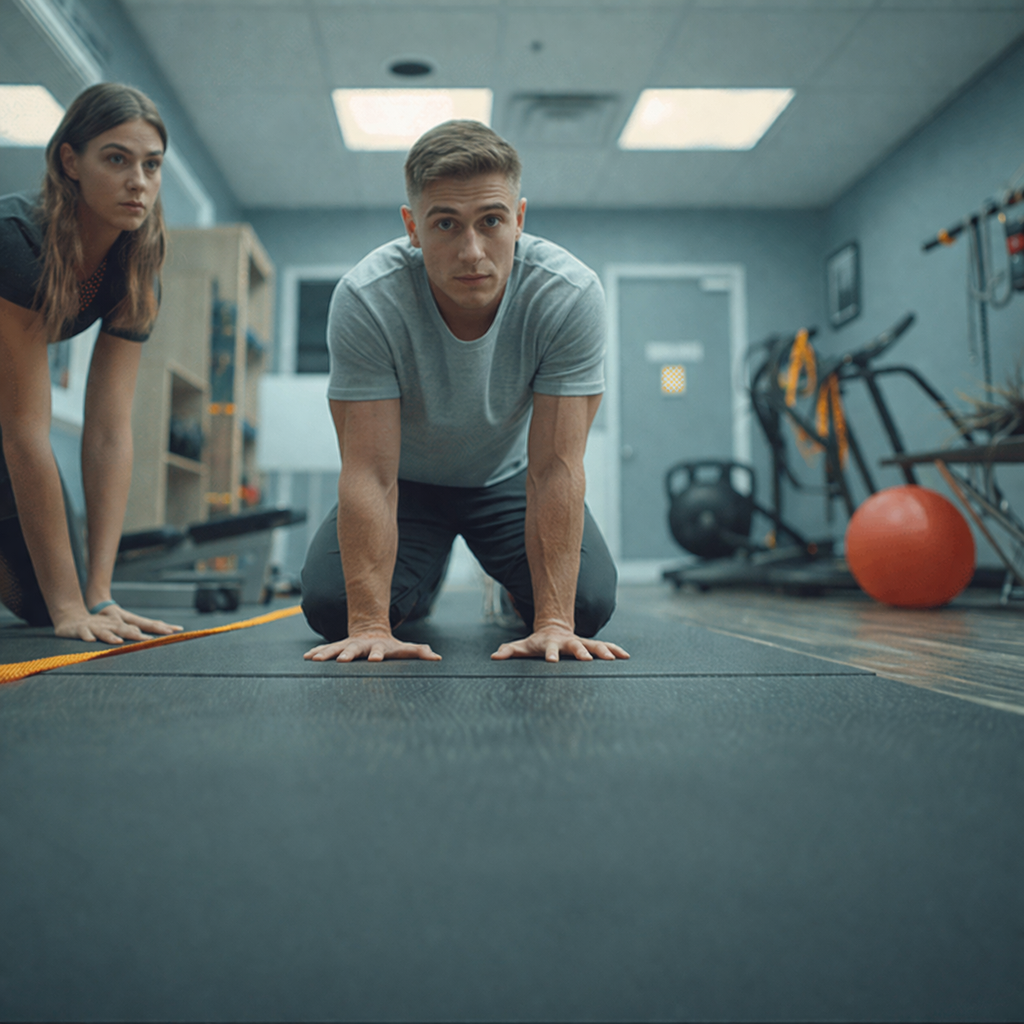
Sprains and strains make up roughly 40% of all sports injuries, according to the American Physical Therapy Association. Here are the injuries most commonly treated through sports injury rehabilitation:
- ACL tears — progressive strength and stability training post-surgery
- Ankle sprains — balance and proprioception exercises to prevent recurrence
- Rotator cuff injuries — shoulder flexibility and cuff-strengthening programs
- Muscle strains — controlled loading and gradual return to full activity
- Stress fractures and dislocations — phased rehab with close monitoring
How soon should I start sports injury rehab after getting hurt?
Start as soon as your doctor or therapist clears you, often within days of the injury. Early rehab reduces swelling faster and can shorten your total recovery time.
Do I need a doctor’s referral to visit a sports injury clinic?
In many areas, you can go directly to a sports injury clinic without a referral. Check with your insurance or clinic — many states allow direct access to physical therapy.
How long does sports injury rehab take?
Recovery time depends on the injury. A mild ankle sprain may take 2–4 weeks. An ACL tear with surgery can take 6–12 months. Your therapist will give you a realistic timeline at your first visit.
How often will I need to come to therapy?
Most patients attend sports rehab physical therapy 2–3 times per week, especially early in recovery. Your therapist will adjust frequency based on your progress and injury severity.
Will sports rehab help prevent future injuries?
Yes. A key part of sports injury rehab is finding and fixing muscle imbalances and movement patterns that caused the injury. Your therapist will teach you exercises to keep those areas strong long-term.
Is orthopedic physical therapy the same as sports rehab?
Orthopedic physical therapy treats the musculoskeletal system and is the foundation of sports rehab. Sports injury rehab goes further by adding sport-specific training and return-to-sport testing tailored to your activity.
Getting Back to What You Love
Sports injury rehab works best when you have the right team behind you. At Precision Sports Physical Therapy, you work with Doctors of Physical Therapy who combine sports rehab, orthopedic care, and strength-based recovery to help athletes return stronger.
Schedule your evaluation today and get a sport-specific recovery plan built to get you back safely, confidently, and ready to perform.