An athlete’s body takes a lot of physical stress. Stanford Children’s Health says about 3.5 million sports-related injuries occur in the U.S. each year. Rest alone isn’t enough to return to full strength. This is where sports-specific rehab comes in. It’s sports-specific physical therapy for your body, your sport, and your goals. Whether you play football, run marathons or swim competitively, a customized plan helps you recover faster and stay in the game longer. Generic programs simply won’t work for athletes who need to perform at high levels.
Table of Contents
Why Generic Rehab Falls Short for Athletes
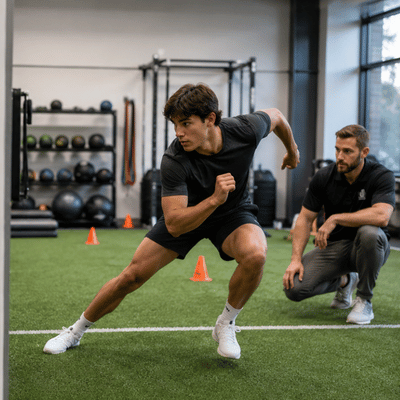
Standard physical therapy treats the injury. Sports-specific rehab treats the athlete behind it.
Ankle sprains can occur in both basketball players and runners. However, their recuperation appears to be somewhat different. Long-range impact must be managed. The other requires powerful leaps and fast cutbacks. A one-size-fits-all strategy completely ignores those specifics.
Athletes’ physical therapists consider the whole picture. They evaluate your posture, your movement habits, your sport, and your seasonal calendar. They then devise a strategy to get you back to competing rather than merely walking.
Key Components of Sports-Specific Rehab
A solid sports-specific rehab program has four main phases.
Movement Screening and Assessment
Your first session with your therapist is a total baseline check. This includes strength, mobility, posture, and movement. Catching weak links early on can prevent bigger problems later.
Strength and Conditioning for Progressives
This phase involves hands-on therapy with specific strengthening and endurance training. The goal is to build strength, not to speed the healing process.”
Functional Training and Sport Drills
All sports physical therapy programs include drills that mirror your actual sport. Cutting, jumping, sprinting, and throwing are all done under controlled conditions. This builds confidence and prepares your body for real game situations.
Objective Return-to-Play Criteria
You don’t return to play based on how you feel. You return based on data. Key benchmarks include:
- Quadriceps strength at 90% or more symmetry between both legs (Chang et al., 2025, AOSSM)
- Hop test performance at 90% limb symmetry index (LSI)
- Passing movement quality assessments
- Psychological readiness using tools like the ACL-RSI scale
Research shows that returning before 9 months after ACL surgery sharply increases re-injury risk. Data drives the decision, not just pain levels.
Benefits of a Customized Rehab Plan
Benefits of a Customized Rehab Plan
Faster, Safer Returns
A thorough analysis by Kumar et al. (2024) found that customized rehabilitation improves full recovery outcomes while hastening return to play.
Reduced Re-Injury Rates
Bezuglov et al. (2022) found that re-injury rates were much lower with soccer-specific rehabilitation than with generic treatment. It is thought to be the best method for repairing muscle injury.
Improved Athletic Performance
Sport mechanics-focused rehabilitation increases power and corrects dangerous movement patterns.
Longer Athletic Career
Load management and injury prevention education protect athletes for the long haul.
Faster, safer returns: A thorough analysis by Kumar et al. (2024) found that customized rehabilitation improves full recovery outcomes while hastening return to play.
Reduced re-injury rates: Bezuglov et al. (2022) found that re-injury rates were much lower with soccer-specific rehabilitation than with generic treatment. It is thought to be the best method for repairing muscle injury.
Improved athletic performance: Sport mechanics-focused rehabilitation increases power and corrects dangerous movement patterns.
Longer athletic career: Load management and injury prevention education protect athletes for the long haul.
New Trends in Performance Sports Physical Therapy
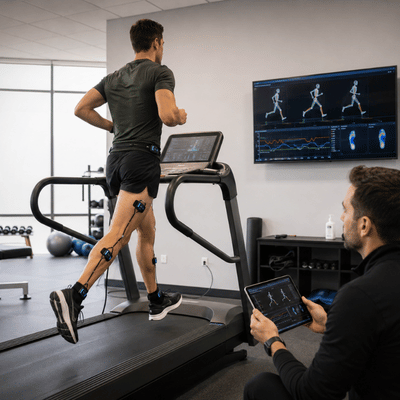
Performance sports physical therapy is changing fast. Here’s what top clinics are using right now.
Telehealth and virtual rehabilitation
The American Physical Therapy Association (APTA) has integrated telerehabilitation into its 2024 clinical standards. Virtual check-ins and remote workout coaching increase accessibility without sacrificing quality.
Wearable Tech and AI
Today, therapists can use sensors, motion trackers, and artificial intelligence tools to track biomechanics outside the clinic. As Aryan et al. (2026) stated, wearable devices that include AI can monitor and provide personalized programs in real-time according to the user’s gait, heart rate, and recovery information.
Data-Driven Decisions and Load Monitoring
According to Gallagher et al. (2024), clinics are managing training loads more effectively thanks to GPS and machine learning capabilities. The secret is to use clinical judgment in conjunction with that data, not in place of it.
Multidisciplinary Healthcare
Strength instructors, dietitians, and psychologists make up today’s top recovery teams. The biopsychosocial paradigm, a whole-person approach, produces superior results, particularly for complicated injuries.
What is sports-specific rehab?
Sports-specific rehab is physical therapy designed around the demands of your sport. It goes beyond basic injury treatment to restore the strength, speed, and movement patterns you need to compete.
How is it different from regular physical therapy?
Regular physical therapy focuses on healing the injury. Sports-specific rehab also prepares you for sport-level activity, including position-based drills, load progression, and return-to-play testing.
Do all sports physical therapy programs follow the same plan?
No. All sports physical therapy programs revolve around the particular player. Your sport, position, injury kind, and season timing all influence your program.
How long does sport-specific rehabilitation take?
It all depends on the injury. Ankle sprains may heal in 3-4 weeks. ACL reconstruction usually takes at least 9 months before a safe return. Your therapist will lead you based on objective standards.
When can I resume practicing my sport?
You return when you meet certain strength and movement requirements, not just when the discomfort is relieved. Clearance consists of hop tests, strength symmetry ratings, and a psychological readiness assessment.
Can physical therapists for athletes also help prevent injuries?
Yes. Physical therapists for athletes often provide movement screenings and load management guidance to catch problems before they become injuries. Prevention is a core part of sports rehab care.
Sports-specific rehab gives athletes the targeted, data-driven treatment they need to get back to 100% and perform at their best. Precision Sports Physical Therapy has experience in high-level sports environments, outpatient orthopedic rehab, hospital care, and home health settings, with therapists who stay current through advanced courses, specialty training, and ongoing study of sports rehabilitation research.
The team develops recovery plans based on each athlete’s sport, body, and objectives, from movement screening to return-to-play planning. Make an appointment for your athlete evaluation with Precision Sports Physical Therapy to begin a personalized recovery plan designed to help you perform with confidence, return safely, and move more powerfully.